An immigration crisis, a terrorist conspiracy, the summer of Survivor, a ridiculous fake billionaire, a fight for Florida, and the 547 votes that changed everything
THE YEAR THAT BROKE AMERICA
Andrew Rice
Now Available“Impressively sourced and energetically written, this is a rollicking account of how the country got to where it is today.”
–Publisher's Weekly
“A heady portrait of the year 2000”
–Kirkus Reviews
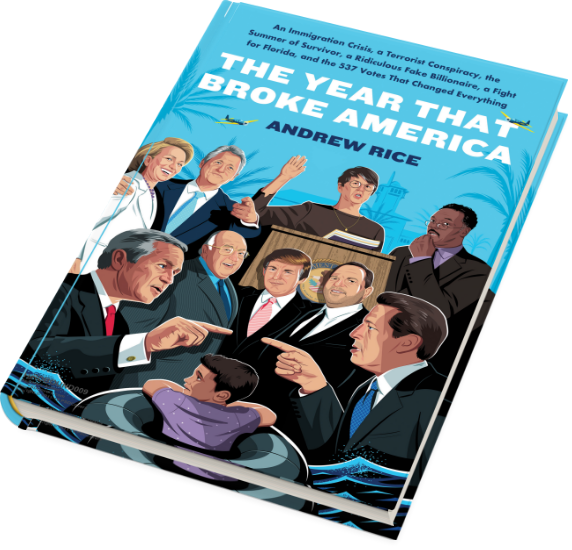
“History seldom pays heed to round numbers,” writes Andrew Rice, “but sometimes it does converge in a time and place.” In The Year That Broke America, the time is the giddy edge of the new millennium, and the place is Florida, the unlikely crucible of the future. In the year 2000, George W. Bush and Al Gore will fight for the presidency, only to see it decided by the smallest margin imaginable in a state that nobody trusts to determine anything. In the year 2000, a third candidate, the bloviating businessman Donald Trump, will mount a ridiculous third-party campaign from Mar-a-Lago. In the year 2000, a castaway Cuban child will ignite a Miami family drama that dominates the nascent 24-hour cable news cycle, creating a fateful crisis for the Florida-born attorney general, Janet Reno. In the year 2000, a high-flying banker—one of the most successful Black men on Wall Street—will stumble into a shady arms dealing conspiracy that stretches from Palm Beach to Pakistan. And in the year 2000, a group of studious young men dispatched by Osama bin Laden will arrive in Florida, hoping to learn how to fly. The Year That Broke America weaves these threads into a vivid, novelistic narrative, marshalling an impressive cast of crusaders and zealots, schmucks and schemers, superstars and shameless scoundrels. It tells the story of the place where we all live now.
Cast of characters

George W. Bush
A baseball man who's swinging for the fences

Elián Gonazlez
A little boy at the center of a TV drama

Al Gore
A genuine prophet who's lost his way
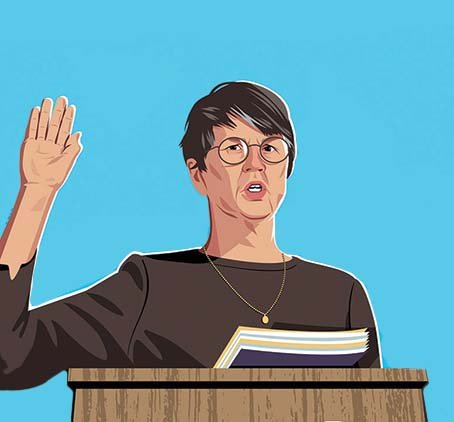
Janet Reno
A Florida woman, trying to make the rules

Bill and Hillary
A power couple, charting their next act

Donald Trump
He's running for president. Is this a joke?
What They're Saying
"In his beautifully crafted and rigorously reported volume, Andrew Rice takes readers back to Florida in 2000, laying out a cultural and political history of a moment at which America's political system was turned inside out, its power structures upended. The Year That Broke America is vivid and wide-ranging; it also happens to be a page turner."
— Rebecca Traister, bestselling author of Good and Mad
“In this masterful work of storytelling that’s as entertaining as it is illuminating, Andrew Rice, an astute and relentless reporter, has retraced the intersections of politics, finance, pop culture and media at the turn of the century to create a rich, pulsing narrative filled with portents, signs, ironies, comedies of error and revelatory new discoveries. By dropping us back into the frothy, decadent whirl of the year 2000 Rice is describing a world we thought we knew – but didn’t. And it’s a world we’ve been living in ever since."
— Joe Hagan, Author of Sticky Fingers: The Life and Times of Jann Wenner and Rolling Stone Magazine
Now Available for Sale
HarperCollins | Amazon | Apple | B&N | Books-A-Million | Bookshop
“Andrew Rice's panoramic history of America in the year 2000 is engrossing, insightful, tragic and above all, irresistible. From the 9/11 plotters and coke-fueled titans of Wall Street, to the battle for the White House and the first buffoonish political pretensions of a certain New York City real estate developer, Rice's keen eye has captured America in full at a moment of critical transition. With a novelist's pacing and an utterly gripping cast of characters, he persuasively traces many of our current discontents to the enthusiasms, antagonisms, and sheer oddities of America at the dawn of the new Millennium.”
—Ronald Brownstein, Bestselling author of Rock Me on the Water